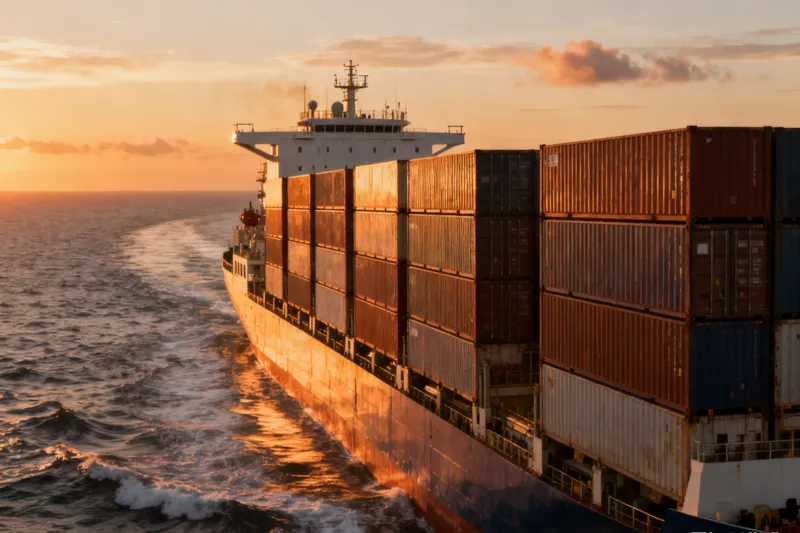
In the marine industry, bearings are fundamental components that ensure power transmission and mechanical reliability. Whether in main propulsion systems, steering gear, deck machinery, pumps, or compressors, bearings support rotating parts, reduce friction, and transmit loads—their performance directly impacts vessel speed, fuel efficiency, and overall service life.
Bearings in propulsion shafts must withstand extremely high radial and axial loads while operating for extended periods in seawater and humid environments. Therefore, these bearings are typically manufactured from corrosion-resistant special alloys or surface-hardened steel, equipped with robust seals and dedicated lubrication systems to minimize seawater ingress and wear, thereby maintaining propulsion efficiency and reliability.
Steering and rudder systems require bearings with high rigidity and precise positioning capabilities; they must remain stable under powerful hydrodynamic forces and impact loads to ensure responsive steering and accurate course control. Achieving this requires high-strength materials, precise geometric structures, and low-clearance assemblies.
Bearings used in deck machinery and auxiliary systems (such as winches and conveyors) emphasize resistance to contamination and fatigue endurance, enabling reliable operation in harsh environments like dust, salt spray, and oil mist. Enclosed seals, wear-resistant greases, and centralized lubrication systems can extend service life and reduce maintenance frequency.
To reduce maintenance burdens and extend overhaul intervals, modern marine bearings incorporate nitriding or coating treatments, anti-corrosion measures, self-lubricating materials, and condition monitoring technologies (such as vibration and temperature monitoring), enabling predictive maintenance and timely replacements to minimize downtime and operational costs.
In summary, the role of marine bearings goes beyond merely supporting rotation; they are key drivers for optimizing vessel performance, navigational safety, and lifecycle costs.
- Bearing types: Deep groove ball bearings, cylindrical roller bearings, thrust bearings. Ball bearings, needle roller bearings. Needle roller bearings, cylindrical roller bearings.